Sites

Where you will stand. Not a map — a briefing. Distances and crowds change every year; the rites do not.

In Makkah

Masjid al-Haram

المسجد الحرام

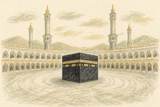
The Sacred Mosque. Tawaf is around the Kaaba at its centre. Multiple floors, expanding courtyards, and Zamzam throughout. All prayer here is multiplied; the work is to stay gentle in a crowd that size.

  • Enter with wudu. The closest gate to your hotel is not always the closest to the Kaaba — follow ‘tawaf’ signs, not instinct.
  • After fard prayers the mataf fills. If you need a quiet tawaf, go in the last third of the night.
  • Do not sit in tawaf lanes or at doorways. The upper floors are longer and often kinder.

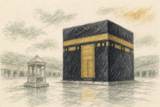
The Kaaba

الكعبة

The House. You circle it, you do not need to touch it. The Black Stone marks the start of each lap; the Yemeni Corner is touched without kissing if you can reach it cleanly.

  • The Kiswah is not to be pulled. Security will move you, and it is not a rite.
  • Hijr Isma‘il (the Hatim) is part of the Kaaba. Praying inside it is like praying inside the House; it is not part of tawaf — walk around it, not through it, during tawaf.
  • Maqam Ibrahim is the glass booth on the mataf. Two rak‘ahs behind it are sunnah, not a fight.

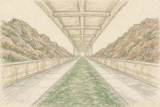
Safa and Marwa

الصفا والمروة

The two hills Hajar ran between. The mas‘a is now air-conditioned marble, about 394 m one way. Seven legs, start Safa, end Marwa.

  • Green lights mark the valley where men jog. Do not block it if you are walking.
  • Wheelchairs have a dedicated level. Book or join the queue rather than forcing the ground floor.
  • Count every leg out loud with your companion. Fatigue invents extra laps.

The Hajj grounds

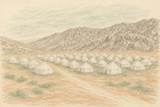
Mina

منى

The tent city. You sleep here on the 8th, 11th, 12th, and the 13th if you stay. Camps are numbered; streets are coloured. The Jamarat complex sits at the Makkah end.

  • Photograph your camp number, street, and a unique pole. Drop a pin while you still have signal.
  • Tents are cold. Toilets peak at prayer times. Eat in camp on the 8th — you want an early night.
  • Do not bring a large suitcase into Mina. A backpack and a spare Ihram is enough.

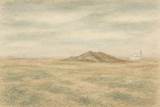
Arafat

عرفات

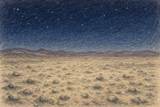
The plain where Hajj happens. Jabal ar-Rahmah is a landmark, not a requirement. Masjid Namirah holds the khutbah. The boundary is signed — being outside it at wuquf means you have not done Hajj.

  • Wadi Uranah in front of Namirah is not Arafat. If you pray the khutbah there, move into the plain afterwards.
  • Shade, water, a written dua list. Climbing the mount costs hours you will not get back.
  • Leave only after sunset, for Muzdalifah, without praying Maghrib here.

Muzdalifah

مزدلفة

Open ground between Arafat and Mina. Combined Maghrib and Isha, pebbles, a short sleep under the sky, Fajr, then on to the Jamarat.

  • There are almost no tents. A mat, a wrap, and a light are the whole kit.
  • Collect small, clean pebbles here. Forty-nine or seventy, plus a handful extra.
  • Women, the weak, and their helpers may leave after half the night. Others stay for Fajr.

Jamarat

الجمرات

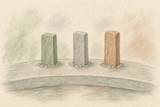
Three pillars (now walls) on a multi-level bridge: small, middle, Aqabah. On the 10th you stone only Aqabah. On the 11th–13th you stone all three, after zawal, in that order.

  • Enter the level your group is assigned. The lowest floor is often the densest.
  • You need the pebbles to land in the basin, not to kiss the wall. Throw and move.
  • If you are knocked, turn with the flow. Stopping in a packed lane is how piles start.
Madinah

Masjid an-Nabawi

المسجد النبوي

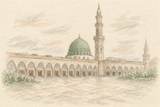
The Prophet’s Mosque in Madinah. Not part of Hajj, and there is no ihram for it. Visit if your package includes it — greet the Prophet ﷺ, pray in the Rawdah if you can book a slot, and keep your voice down.

  • Rawdah slots go through the Nusuk app. Do not push the ropes.
  • Salam at the Prophet ﷺ is: Assalamu ‘alayka ya Rasul Allah, then Abu Bakr, then Umar. Short, then move.
  • Quba and Uhud are worth a morning if you have one. Do not miss Fajr in Nabawi for a tour.